
Published field evidence · Strawberry 1 · April–June 2026
From Field Signals to Field Action
How field observations became inspection evidence and farm decisions at Michell Farms.
Human-supervised mission intelligence
Applied to agricultural inspection
- 2.87-acre field
- Human-reviewed evidence
- Original report below
Grower-reported commercial outcome
Evidence that supported a supplier claim.
The grower used Chimera’s evidence to substantiate a supplier claim and received a refund. The refund amount is private.
Supplier correspondence was not independently reviewed. This is the grower’s account, not a calculated return on investment.
The case in three points
What was observed
Weak planting material in five bottom rows, Row 15 irrigation stress and later scattered deterioration required separate inspection and decisions.
What Chimera contributed
Dated aerial reviews, locations for closer inspection, supporting photographs and a record that kept changing conditions visible.
What people decided
The grower pursued a supplier claim, deferred irrigation repair and adapted treatment and harvest decisions. People reviewed the evidence and chose the response.
02 / The product in use
Human-supervised mission intelligence
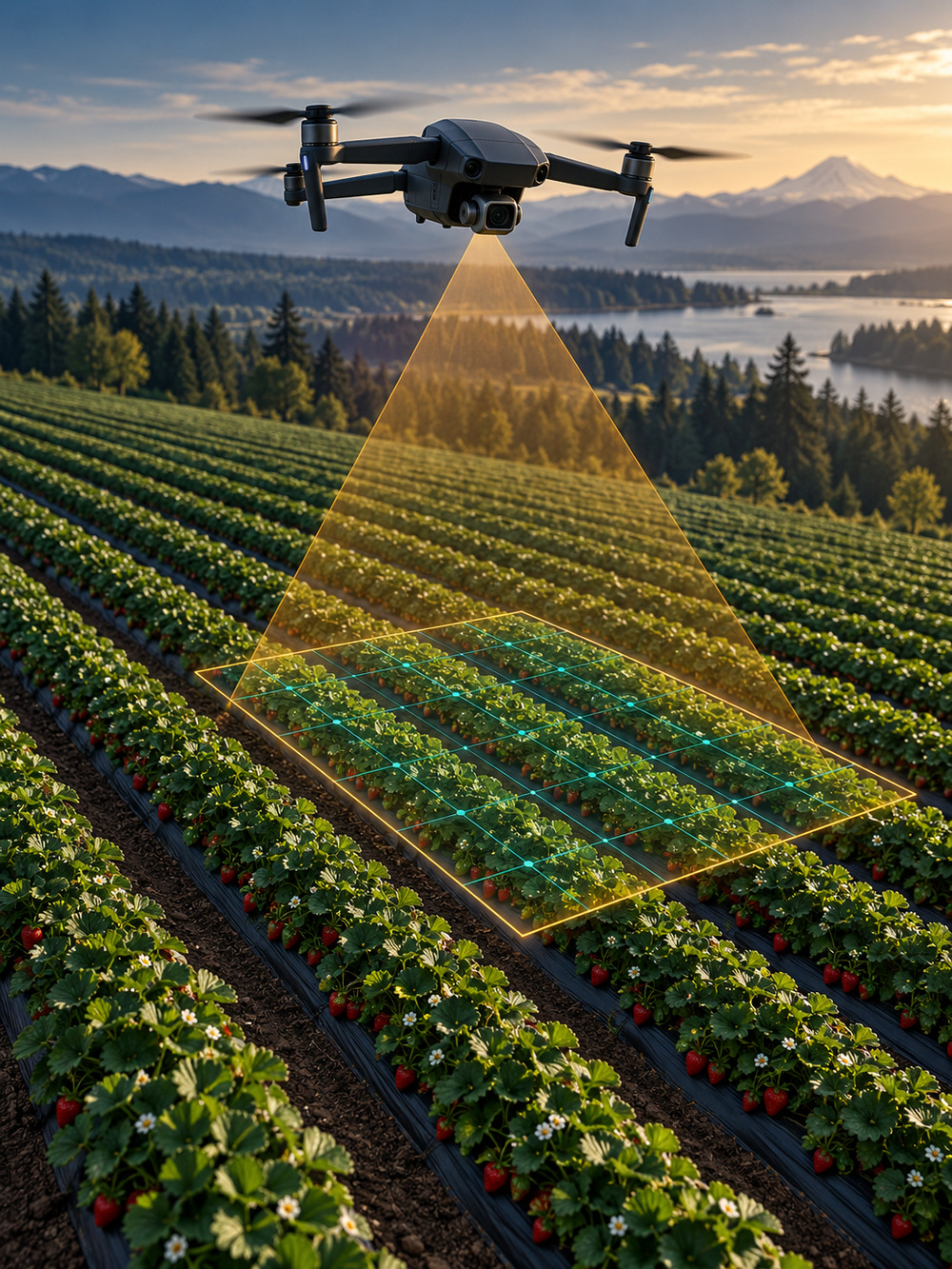
Chimera Vision is a human-supervised mission-intelligence layer. It processes imagery and location data locally, identifies areas requiring attention, supports operator review and directs further evidence collection. Strawberry 1 shows this approach in use for field inspection and farm decisions.
- 1
SURVEY
Review aerial crop signals
- 2
LOCATE
Select areas for human review
- 3
INSPECT
Collect ground evidence
- 4
COMPARE
Track dated assessments
- 5
DECIDE
Support the farm response
Demonstrated in Strawberry 1
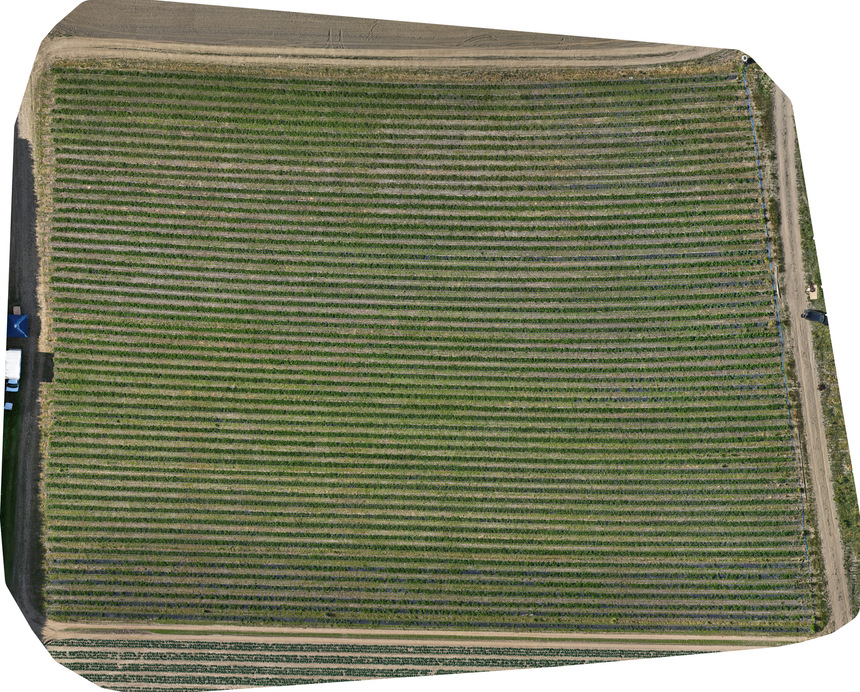
In Strawberry 1, repeated aerial reviews located areas of concern, ground observations and photographs added detail, and dated comparisons kept changing conditions visible. The grower used that evidence in treatment, irrigation and supplier decisions. People reviewed the evidence and chose the response.
Three concerns required different decisions
Three concerns required different decisions: weak planting material in five bottom rows, Row 15 irrigation stress, and later scattered crop deterioration. The grower used the evidence to address each concern separately.
2.87 acres
1.161 ha · operator-reported field area
A record people could return to
Dated reviews kept concerns, photographs and grower decisions together, giving the farm a record it could return to as conditions changed.
03 / Early decisions
Evidence for the next decision
20 April 2026
Planting material
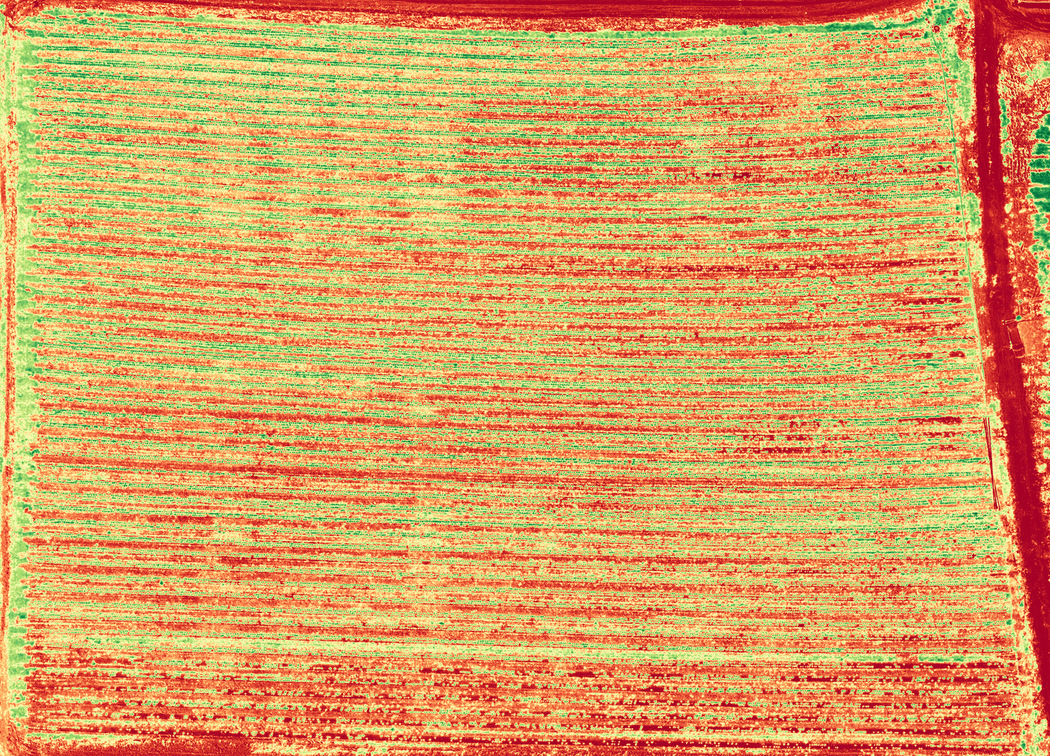
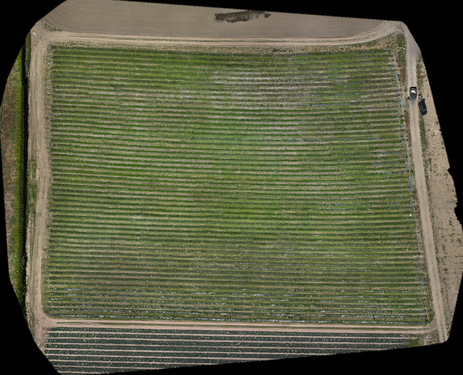
The April 20 review focused attention on five bottom rows. The grower identified the planting material as weak, used Chimera’s imagery and documentation to substantiate a supplier claim, and received a refund. The amount is private. This commercial outcome comes from the grower’s account.
29 April 2026
Irrigation
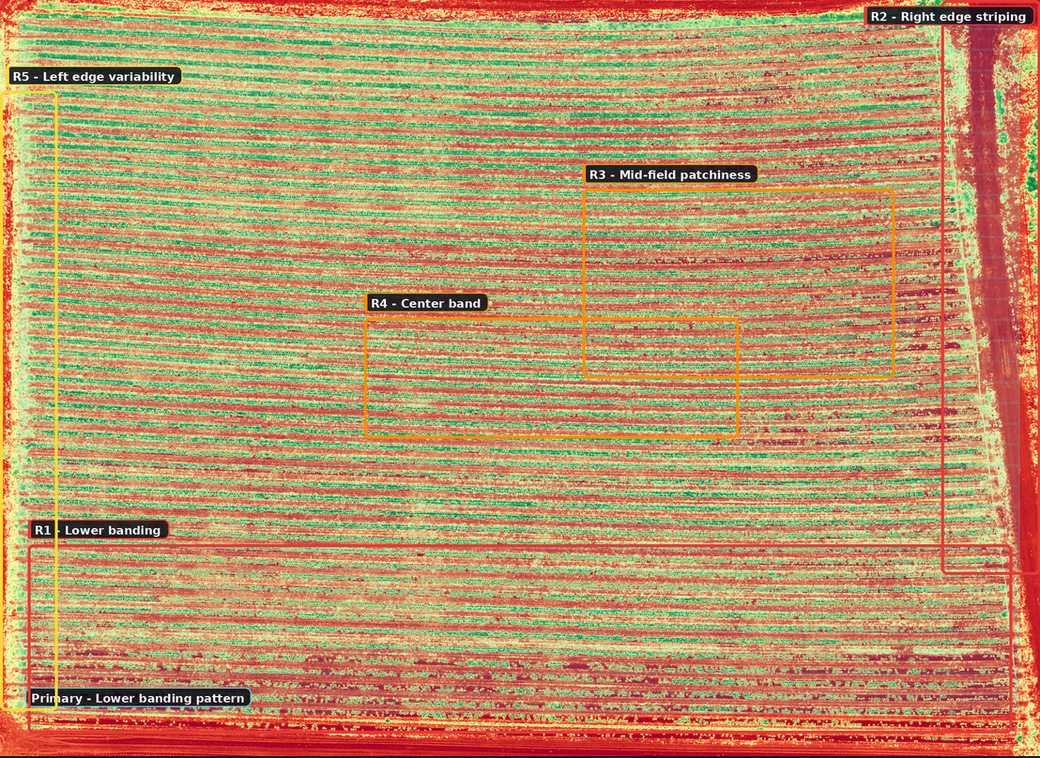
The April 29 review focused attention on Row 15 irrigation stress. The farm deferred repair until after the season. The separate estimate below records the repair planning budget.
A deferred planning budget
Conditional repair planning budget: CAD 950–1,350 before tax, for two accessible replacement drip lines along an assumed 100-metre row (200 metres of line). Repair was deferred until after the season. This is a planning allowance, not expenditure; line specification, fittings and labour detail remain open assumptions in the appendix.
04 / Change over time
Where the next inspection starts
22 May 2026
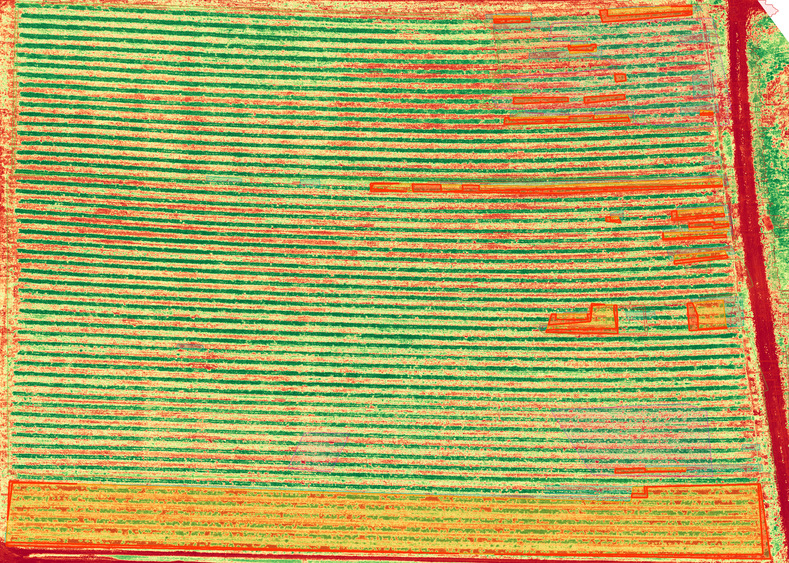
27 May 2026
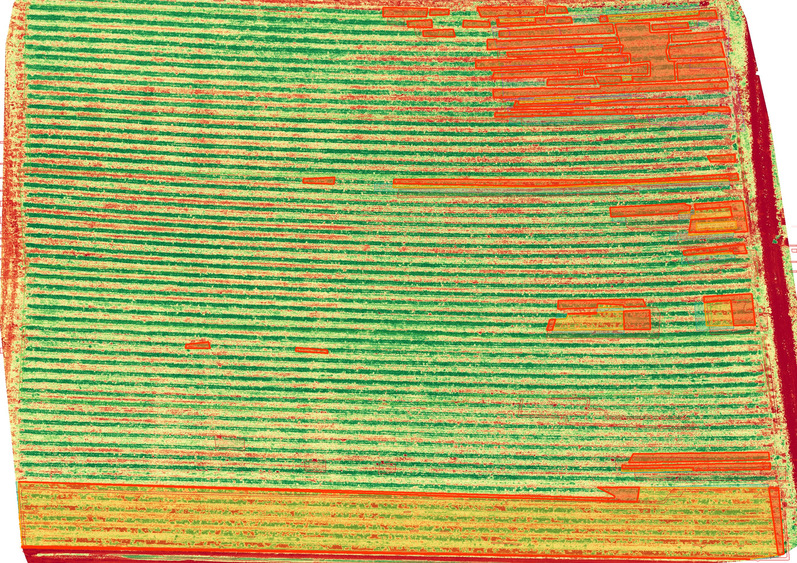
29 May 2026
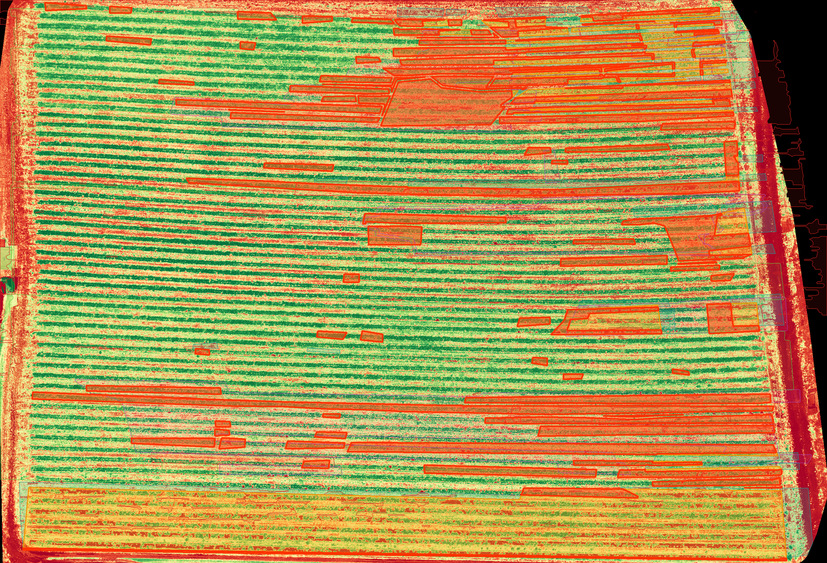
4 June 2026
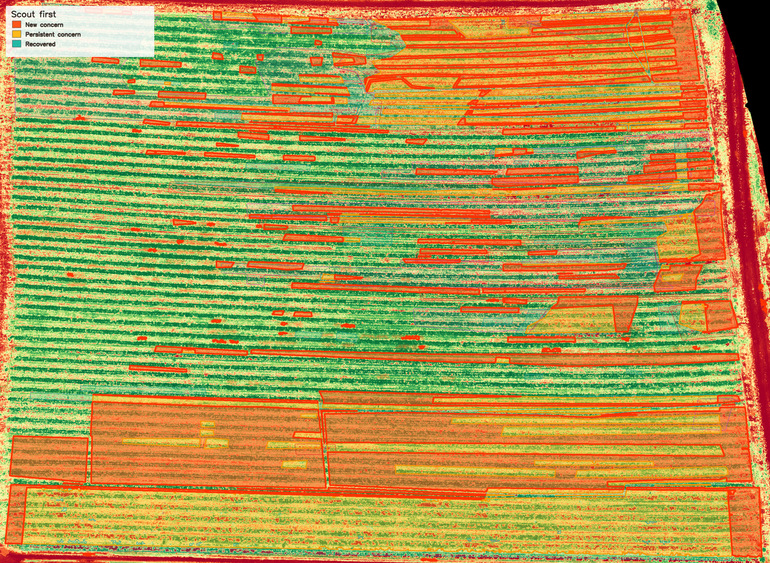
Reported image-space concern share
| Review date | Concern share |
|---|---|
| May 8, 2026 | 12.7% |
| May 12, 2026 | 11.8% |
| May 18, 2026 | 13.3% |
| May 22, 2026 | 12.9% |
| May 27, 2026 | 17.7% |
| May 29, 2026 | 26.8% |
| June 4, 2026 | 39.5% |
Between May 22 and June 4, reported image-space concern share changed by +26.6 percentage points (39.5 − 12.9). This describes the reported review series. It does not establish acres affected, disease extent or treatment effect.
Source masks, numeric calibration and consistent cross-date denominators were unavailable. The percentages cannot be converted into affected acres or recovered yield.
05 / Farm response
What the field inspection added
27 May 2026
29 May 2026
11 June 2026
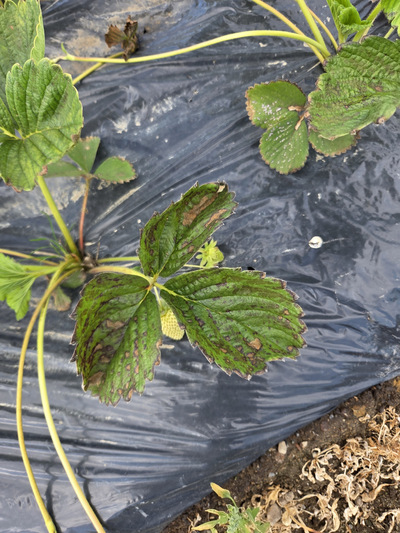
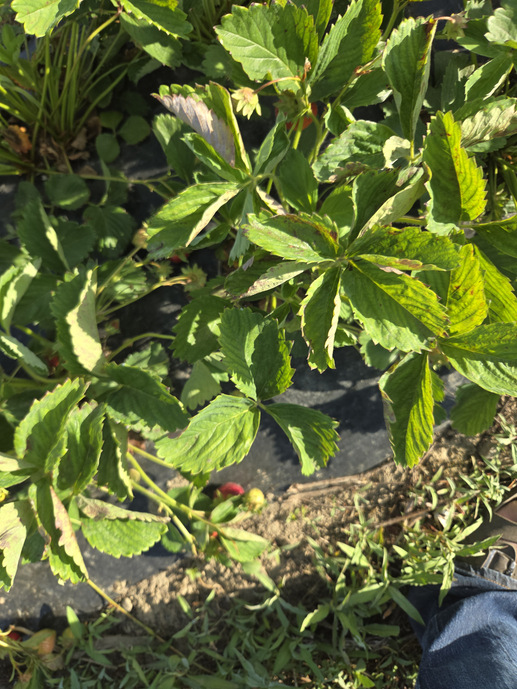
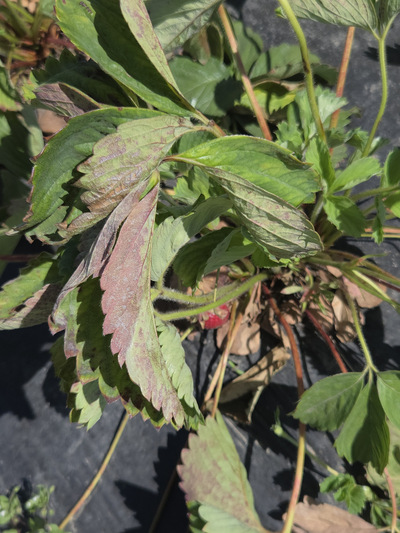
Ground inspections took place on May 12, May 29 and June 11. The selected photographs, captured on May 27, May 29 and June 11, documented leaf discolouration, curled margins and brown tissue. These details gave the grower a record to compare with the aerial assessments.
Downy mildew was the working suspicion during the field response. Later in the season, tissue testing identified black rot, according to the farmer. The aerial and ground imagery provided the inspection record; disease identification came from the later testing account.
The farm applied Luna Tranquility plus Captan three times, then changed to Pristine plus Captan for two applications. Affected patches continued to deteriorate. The grower stopped treating those patches and harvested the remaining fruit. This treatment-and-harvest sequence is recorded in the grower’s account.
The farmer estimated fruit loss at approximately 100 lb (45 kg), separate from the mapped-concern figures. The hedge was removed later in the season. Its proposed role in reinfection remains unproven.
Estimated product-consumption cost
Estimated product-consumption cost: approximately CAD 1,570–1,710 for five assumed full-field applications, including CAD 805–945 for the final two. The model uses current Canadian label rates, an assumed Maestro 80 WSP Captan formulation, 2023 Québec price proxies and a 2026 Saskatchewan Pristine price. It excludes labour, fuel, equipment, tax, shipping and downtime. This is neither actual expenditure nor a treatment recommendation.
The reported treatment sequence is not a validated spray rotation. Actual rates, coverage, application dates, invoices and Captan formulation were not verified. The final two applications are included in the five-application total.
06 / Pilot consultation
Build useful inspection evidence
Know where to look, collect the evidence that matters and keep people in control. Strawberry 1 shows how Chimera Vision connects field observations to practical farm decisions.
- Field visibility
- Keep emerging field concerns in view.
- Targeted inspection
- Take dated map cues into the field.
- Evidence continuity
- Retain images and observations across visits.
- Decision traceability
- Connect concerns, farm responses and follow-up.
Implemented for agricultural field work
The agricultural processing and review workflow is fully implemented and field deployed. In Strawberry 1, people used it to review aerial imagery, collect ground evidence, compare changing conditions and support grower decisions.
The value demonstrated here is practical: inspection priorities, supporting photographs, dated comparisons and evidence used in farm and supplier decisions.
Book a Chimera Vision pilot consultation.
Define an inspection question, select one field for a demonstration, agree on permitted actions and establish how usefulness will be checked.
Review the workflow, discuss your inspection question and establish what an appropriate demonstration would need to show. This requests a conversation; it does not reserve a date.
Evidence and calculation notes
Supporting qualifications from the supplied appendix, reviewed 7 October 2026.
- The supplier claim and refund are grower-reported. The refund amount is confidential, and supplier correspondence was not reviewed.
- Black rot is a later farmer-reported tissue-test result; the laboratory report was not available for independent disease confirmation.
- The 2.87-acre field area is operator-reported, not a newly surveyed boundary. Its conversion is 1.161 ha; it is not a denominator for converting image-space concern percentages into affected acres.
- Numeric NDVI calibration, source masks, exclusions and consistent cross-date denominators were unavailable. The concern-share series cannot establish disease extent, treatment efficacy or recovered yield.
- Actual treatment rates, per-pass coverage, dates, invoices and Captan formulation are unverified. The reported sequence is not a validated spray rotation; label-based costing neither recommends it nor establishes historical compliance.
- The product-consumption model uses mixed-year price proxies that are not inflation-adjusted or current BC procurement quotes. The 2023 Québec source is retained as indexed text because the original PDF is unavailable; the 2026 Pristine listing is from Saskatchewan. The final two applications are included in the five-application total.
Original report and supporting appendix
The full case study above follows the six-page report. Both original supplied PDFs remain available unchanged.