
Agriculture / Field intelligence
Intelligence that
focuses the field.
Observe. Focus. Verify.
Read the whitepaper PDFA vision for adaptive, operator-supervised field inspection. Connect an observation to the evidence that matters next.
Explore the approachThe next observation matters
Turn a field signal into a better question.
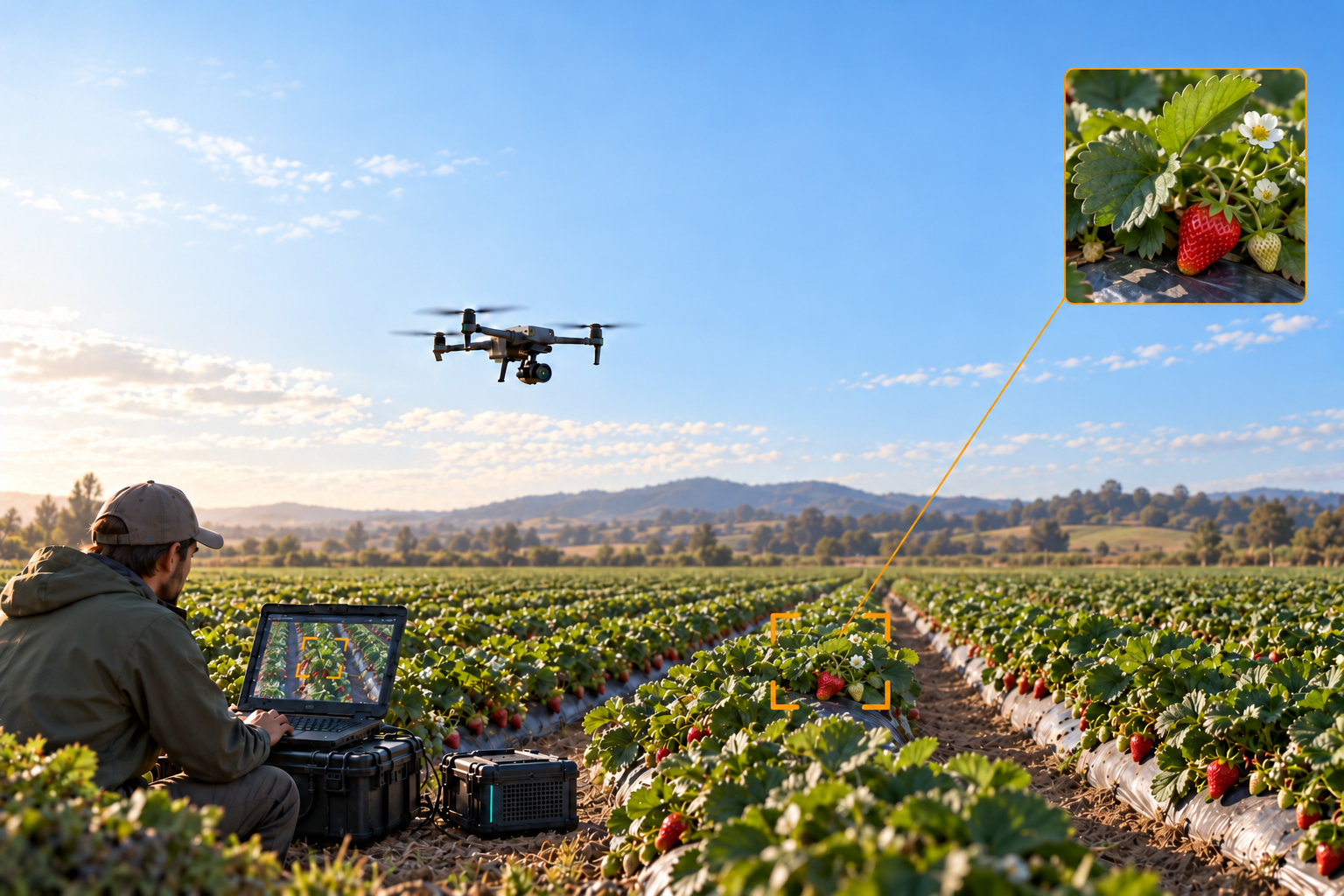
An aerial view can reveal a change without explaining its cause. Uneven appearance, a changing patch or a row that differs from its neighbours gives the team somewhere to look closer.
Chimera’s direction is to connect the overview to purposeful verification: locate the concern, identify the evidence still needed and give the operator a focused next observation to consider.
An adaptive inspection concept
See the field. Focus the follow-up.
An intended workflow that connects observation, local analysis and operator-approved collection. Each follow-up begins with an inspection question.
- 01
Aircraft / field team
Observe.
Collect an overview of the agreed field and retain the available capture time and location context.
Begin with a defined field question.
- 02
Chimera Vision
Focus.
Bring the observations into context and highlight an area that warrants review. Identify the detail that could clarify the concern.
A visual signal is not a diagnosis.
- 03
Operator
Authorise.
Consider the proposed collection task and the field conditions. Approve, modify or reject a supported aircraft action—or direct a person to inspect on the ground.
People choose the response.
- 04
Aircraft / field team
Verify.
Gather a closer view or ground observation that addresses the question. Keep the new evidence linked to the original concern.
Choose the observation the question needs.
- 05Evidence informs the next observation
Reassess. Then continue.
Review the additional evidence, compare relevant dates and record the decision. The next step may be another observation, expert assessment or a grower-led field response.
Local intelligence. Human control.
Intelligence beside
the operator.
The proposed architecture places local analysis on a ground unit with the field crew. The aircraft collects evidence; the operator decides which supported action to authorise.
Aircraft
Available imagery
and telemetry
Chimera ground unit
Local analysis
and proposed collection
Operator
Approve, modify
or reject
An approved task returns through the supported aircraft interface. Additional evidence closes the loop.
Keep analysis close to the operation.
The intended analysis workflow runs locally without requiring cloud processing. Accessible imagery, telemetry and transfer timing still depend on a supported aircraft data connection.
Let the operating envelope shape the task.
A proposed action must fit the aircraft interface, flight plan and site constraints. Standoff, visibility, battery, link-loss and abort behaviour need to be established for the intended operation.
Agriculture inspection possibilities
Choose the evidence
the question needs.
Focus collection on the information that can move the review forward. Different tasks need different views, sources and levels of detail.
Targeted scouting
Take the overview into the field.
Use a field observation to prioritise where a person should look closer. A useful task records the area, the original image and the question that the ground inspection should answer.
What should the field team verify here?
Changing conditions
Keep the dates in the picture.
Compare appropriately aligned observations and retain their capture conditions. A changing image can guide review; it does not by itself establish disease extent, recovery or treatment effect.
What changed, and is the comparison meaningful?
Decision records
Carry evidence into the response.
Bring photographs, field notes and grower decisions into one traceable record. A reviewer can distinguish the original concern from the evidence and the action that followed.
What supports this decision, and what remains uncertain?
The source mix depends on the inspection task and available interfaces. Complementary observations need not come from one aircraft or one flight.
From capture to a useful finding
Keep the evidence
with the decision.
A useful field record connects the area of concern, the dated images, the closer observations and the grower’s response. It helps people return to the evidence as conditions change.
Record what the evidence supports, who reviewed it and what still needs to be resolved.
Illustrative finding structure
- Reference
- Field or area, source image, capture date and available location context.
- Question
- The candidate observation and the evidence needed to assess it.
- Response
- The requested follow-up and the operator’s decision.
- Evidence
- Additional imagery or observations linked to the original question.
- Assessment
- The reviewed finding or an unresolved evidence requirement.
The foundation and the direction
Build from evidence.
Validate for the task.
The Strawberry 1 record documents repeated aerial review, ground observations, dated comparisons and grower decisions. That retrospective field workflow is the evidence foundation for this paper.
The adaptive sequence above is a future direction. Strawberry 1 does not demonstrate an autonomous or same-flight revisit loop, disease diagnosis, recovered yield or treatment efficacy. Aircraft and sensor integration for adaptive collection require validation for the intended operation.
In Strawberry 1, the grower reported using Chimera’s evidence to substantiate a supplier claim and receiving a refund. The amount is private; supplier correspondence was not reviewed.
Read the real Strawberry 1 case studyDownload the evidence and calculation appendix
Explore the whitepaper
What should your
next observation answer?
Explore the possibilities, then bring us your inspection question, aircraft and evidence requirements.
Chimera Innovation Inc. · Victoria, BC
info@chimera.vision