Energy / Power lines
Intelligence that
focuses the mission.
Observe. Focus. Collect.
Read the whitepaper PDFA vision for adaptive, operator-supervised inspection. Connect what the aircraft sees to what it investigates next.
Explore the approachThe next observation matters
A useful inspection
follows the question.
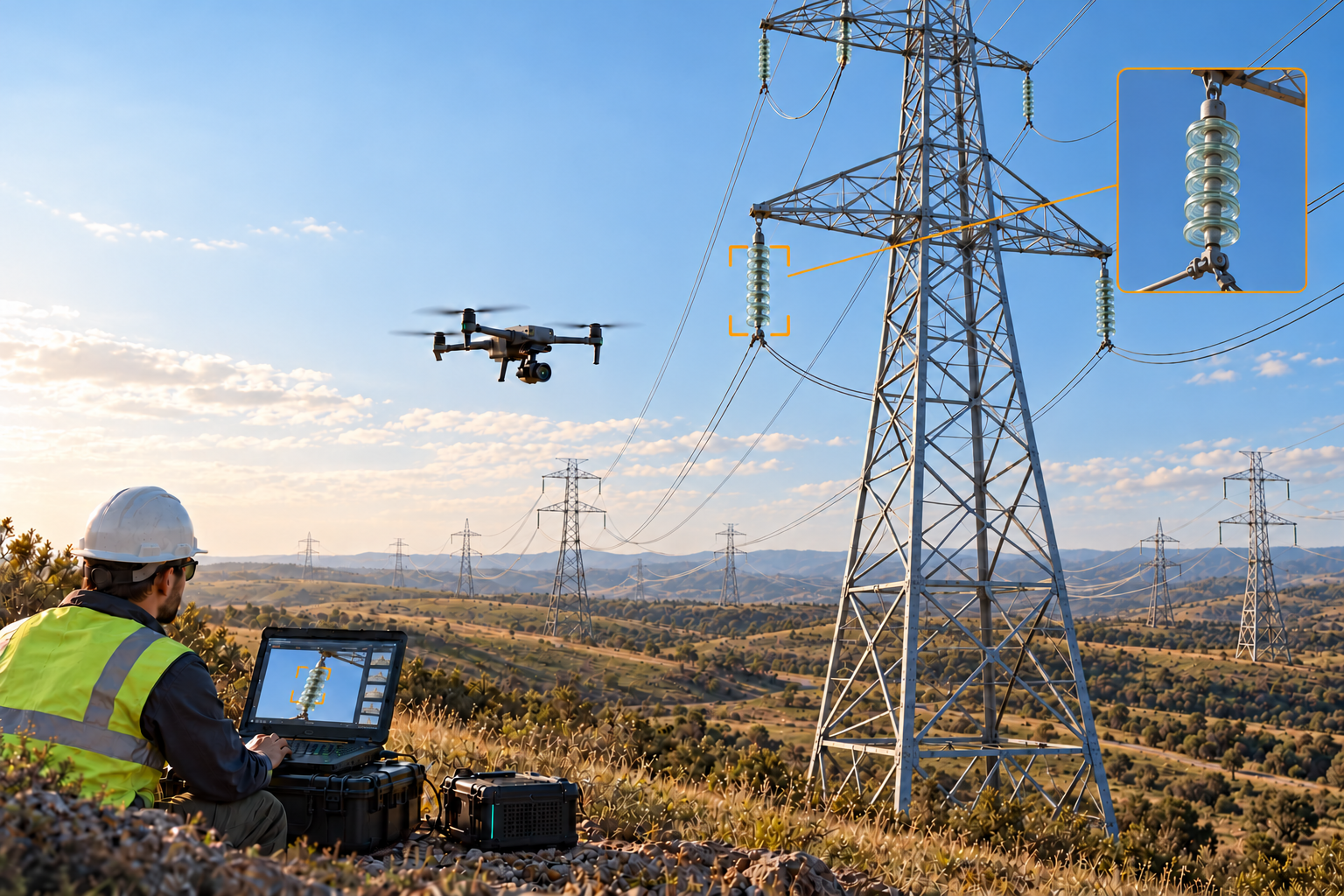
An image can raise a question without answering it. A distant insulator, an obscured fitting or an ambiguous mark may need another view.
Chimera Vision’s direction is to connect that moment of uncertainty to purposeful collection while the field operation is active: recognise what needs attention, propose the next observation and put the decision in the operator’s hands.
The adaptive mission
One observation.
A more informed next move.
An illustrative power-line workflow, from planned capture to focused follow-up and a reviewable finding.
- 01
Aircraft
Observe.
Capture the asset along the agreed inspection route. Available imagery and telemetry reach Chimera’s local ground system.
Start with the inspection question.
- 02
Chimera Vision
Focus.
Bring the observation into context. Identify a candidate for review and propose the evidence needed to understand it.
A candidate is a question, not a diagnosis.
- 03
Operator
Authorise.
Review the target, requested view and operating constraints. The operator can approve, modify or reject the proposed action.
Only approved tasks go to the supported aircraft interface.
- 04
Aircraft
Collect.
Use optical zoom, a complementary sensor or an approved safe viewpoint to gather the requested evidence.
Give the next capture a purpose.
- 05Evidence informs the next observation
Reassess. Then continue.
New evidence returns to Chimera. The reviewer can support a finding, dismiss the candidate or request more information. Record the outcome, then resume or adjust the agreed mission.
Local intelligence. Human control.
Intelligence beside
the operator.
The aircraft collects. A portable ground unit analyses available evidence and prepares a proposed response. The operator directs what happens next.
Aircraft
Available imagery
and telemetry
Chimera ground unit
Local analysis
and proposed collection
Operator
Approve, modify
or reject
An approved task returns through the supported aircraft interface. Additional imagery closes the loop.
Processing stays with the field crew.
The proposed analysis workflow runs locally without requiring cloud processing. A supported aircraft connection still carries the available data and approved tasks; image detail, transfer timing and telemetry shape what can be assessed.
The operating envelope shapes the action.
Each proposed view must fit the aircraft interface, mission plan and site constraints. Standoff, visibility, battery, link-loss and abort behaviour need to be established with the flight system for the intended operation.
Power-line inspection possibilities
Choose the evidence
the question needs.
Different sources can answer different questions. The architecture is designed to bring the relevant observations into a shared time and location context.
RGB imagery
See the component.
Explore insulators, fittings, conductors and structure surfaces. Another angle or greater optical detail can help distinguish a feature from overlap, glare or an imaging artefact.
Which view would make this observation clearer?
Thermal, where compatible
Investigate a temperature observation.
Associate compatible radiometric data with RGB context. Loading, wind, reflections, emissivity and measurement settings matter when a reviewer interprets a temperature observation.
What visual and operating context does this temperature need?
Geometry and survey data
Put the asset in context.
Use available positioning, camera information and survey models to relate an observation to the asset and plan a useful view. Geometry must be fit for the task; it does not by itself establish a certified clearance result.
Where is the observation, and from where can it be understood?
The source mix depends on the inspection task and available interfaces. Complementary observations need not come from one aircraft or one flight.
From capture to a useful finding
Give the reviewer
the whole thread.
A highlighted image is a starting point. A useful record shows what raised the question, what was collected next and how the evidence was assessed.
The goal is traceable evidence that helps a qualified reviewer reach a supported assessment—or identify what is still unresolved.
Illustrative finding structure
- Reference
- Asset or area, source image, capture time and available location context.
- Question
- The candidate observation and the evidence needed to assess it.
- Response
- The requested view and the operator’s approval, modification or rejection.
- Evidence
- Additional imagery linked to the original observation.
- Assessment
- A reviewed finding or a clear statement of what remains unresolved.
The foundation and the direction
Build from evidence.
Validate for the asset.
Chimera has developed agricultural field workflows and demonstrated the adaptive mission loop in software-in-the-loop testing. This whitepaper sets out its intended application to power-line inspection.
Power-infrastructure performance, aircraft integration and sensor compatibility require asset-specific validation. The concept visuals illustrate the approach; they are not records of a Chimera utility deployment.
Read the published field workExplore the whitepaper
What should your
next observation answer?
Explore the approach, then bring us your aircraft, inspection task and evidence requirements.
Chimera Innovation Inc. · Victoria, BC
info@chimera.vision