Energy / Solar
Intelligence that
focuses the inspection.
Observe. Focus. Collect.
Read the whitepaper PDFA vision for adaptive, operator-supervised solar inspection. Connect an observation to the evidence that matters next.
Explore the approachThe next observation matters
A temperature observation is the start of a question.
An unusual visual or thermal appearance can warrant a closer look. A useful investigation brings the observation together with the right module, the matching image and the operating conditions.
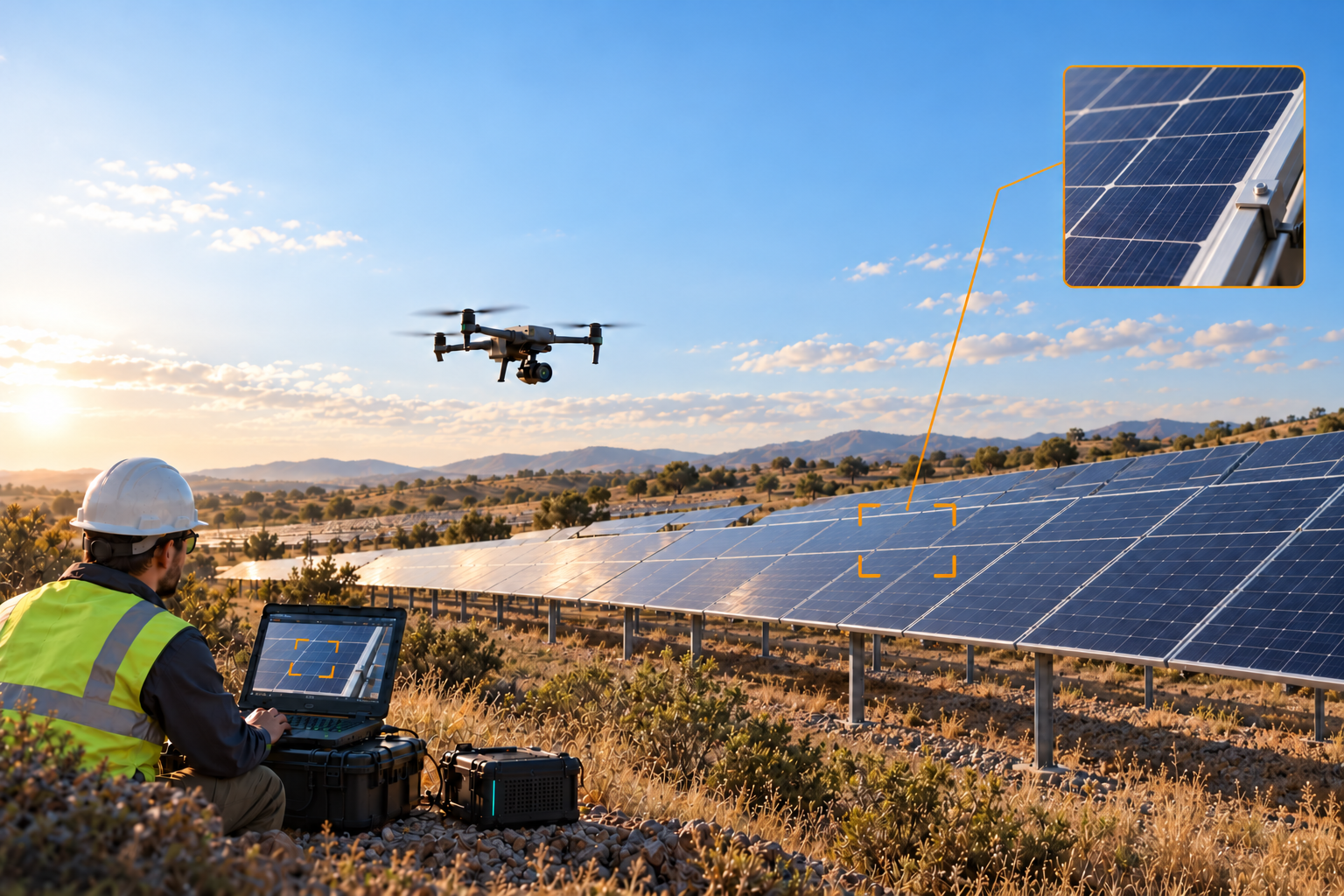
Chimera’s direction is to connect that question to the next useful collection. The proposed workflow brings local analysis and operator decisions together so another view can be requested with a clear purpose.
An adaptive inspection concept
Observe the array. Focus the evidence.
An intended workflow that connects observation, local analysis and operator-approved collection. Each follow-up begins with an inspection question.
- 01
Aircraft / payload
Observe.
Collect the agreed array views and available capture context. Compatible thermal and visual sources can contribute different evidence.
The task determines the data needed.
- 02
Chimera Vision
Focus.
Relate a candidate observation to its visual context and propose the additional view or information needed for review.
A thermal candidate is not a confirmed fault.
- 03
Operator
Authorise.
Review the target, payload request and operating constraints. Approve, modify or reject a supported collection action.
Keep the operator in the loop.
- 04
Aircraft / payload
Collect.
Obtain a complementary view or relevant sensor observation from an approved safe viewpoint.
Collect to clarify, not simply to add images.
- 05Evidence informs the next observation
Reassess. Then continue.
Associate the additional evidence with the original observation. A qualified reviewer can record an assessment, dismiss an artefact or identify the further information required.
Local intelligence. Human control.
Intelligence beside
the operator.
The proposed architecture places local analysis on a ground unit with the field crew. The aircraft collects evidence; the operator decides which supported action to authorise.
Aircraft
Available imagery
and telemetry
Chimera ground unit
Local analysis
and proposed collection
Operator
Approve, modify
or reject
An approved task returns through the supported aircraft interface. Additional evidence closes the loop.
Keep analysis close to the operation.
The intended analysis workflow runs locally without requiring cloud processing. Accessible imagery, telemetry and transfer timing still depend on a supported aircraft data connection.
Let the operating envelope shape the task.
A proposed action must fit the aircraft interface, flight plan and site constraints. Standoff, visibility, battery, link-loss and abort behaviour need to be established for the intended operation.
Solar inspection possibilities
Choose the evidence
the question needs.
Focus collection on the information that can move the review forward. Different tasks need different views, sources and levels of detail.
Visual asset detail
See what the first view could not show.
Request another angle or greater usable optical detail for a module, fitting or visible surface concern. Lighting, reflections, resolution and the viewing angle shape what the image can support.
Would a complementary view clarify the feature?
Compatible thermal evidence
Put temperature in context.
Bring suitable radiometric observations together with corresponding RGB detail. Irradiance, wind, loading, reflections and measurement settings matter to interpretation.
What else must be known before this is assessed?
Asset association
Keep the finding attached to the right asset.
Use available positioning and site references to associate observations with the appropriate array area or asset. Asset-level identification requires a verified reference and suitable location accuracy.
Can the reviewer trace this observation to its source?
The source mix depends on the inspection task and available interfaces. Complementary observations need not come from one aircraft or one flight.
From capture to a useful finding
Keep the evidence
with the decision.
A useful solar finding retains the source observation, the asset reference, the capture context and the related visual or thermal evidence. That record gives the reviewer a basis for the next decision.
Record what the evidence supports, who reviewed it and what still needs to be resolved.
Illustrative finding structure
- Reference
- Array area or verified asset reference, source image and available capture context.
- Question
- The candidate observation and the evidence needed to assess it.
- Response
- The requested follow-up and the operator’s decision.
- Evidence
- Additional imagery or observations linked to the original question.
- Assessment
- The reviewed finding or an unresolved evidence requirement.
The foundation and the direction
Build from evidence.
Validate for the task.
This paper describes an intended solar-inspection workflow, not a recorded Chimera solar deployment. Payload compatibility, asset association and performance need validation against the chosen equipment and inspection task.
The concept does not establish fault-detection accuracy, electrical diagnosis, generation loss or return on investment. Temperature observations require appropriate capture conditions and qualified interpretation.
Explore the whitepaper
What should your
next observation answer?
Explore the possibilities, then bring us your inspection question, aircraft and evidence requirements.
Chimera Innovation Inc. · Victoria, BC
info@chimera.vision